The Door That Changed Everything
Three days in an emergency room. Eleven days behind a locked door. A lifetime changed forever.

People ask me all the time,
“How did you get here?”
“Why mental health?”
“Why nature?”
“Why women?”
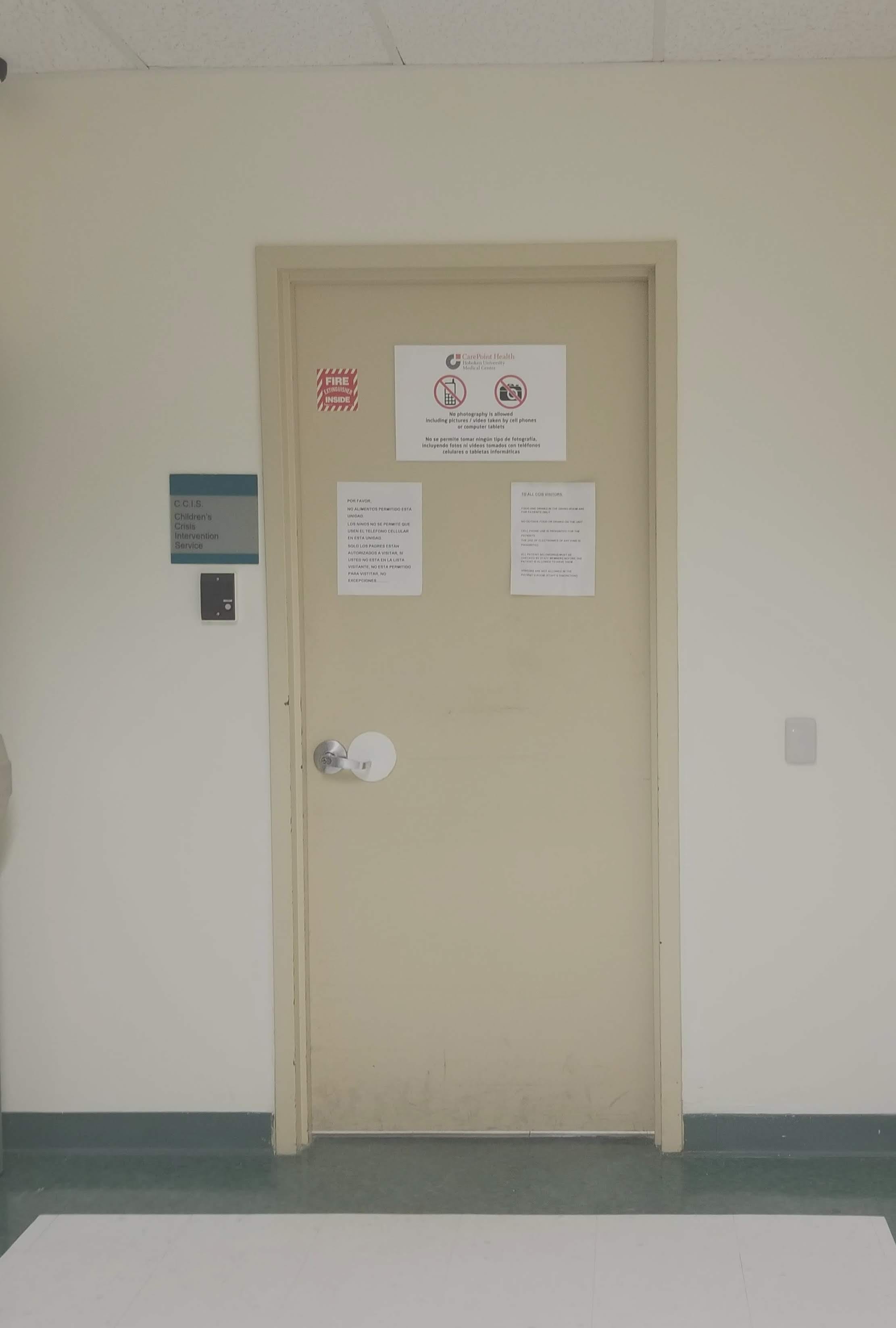
The answer begins with a door.
But before I met that door...
I spent three days in an emergency room.
Three days before I met that door, my son had a routine appointment with his psychiatrist.
I already knew something wasn’t right.
A mother knows.
About five minutes after they disappeared into her office, she stepped back into the waiting room.
She looked at me and quietly said,
“I think it’s time.”
I remember looking at her.
“Time for what?”
Even though...
I already knew.
Time for a higher level of care.
Time to intervene before it was too late.
So we went to the emergency room.
I thought we’d be evaluated.
Maybe spend the night.
Get some answers.
Instead...
We stayed there for three days.
Three days under suicide precautions.
No strings in his sweatpants.
No pens.
No spiral notebooks.
Nothing that could be used for self-harm.
We waited.
And waited.
Because there weren’t any adolescent psychiatric beds available.
No one could tell us when one would open.
Or where.
Maybe tomorrow.
Maybe next week.
Maybe hours away.
So we waited.
Watching the clock.
Watching my son.
Trying to pretend everything was okay.
Knowing it wasn’t.
Finally...
A bed opened.
Hoboken.
Not exactly where I wanted him to go.
I hate cities.
But at that point...
I didn’t care.
It was closer than many of the other options.
He climbed into the ambulance.
I followed behind in my car.
I had no idea I was about to walk through the hardest door of my life.
We entered through a secured back entrance.
A nurse sat me down while another staff member took my son into the unit.
The questions came one after another.
“Is he violent?”
“No.”
“Does he have angry outbursts?”
“No.”
“Do you consent to physical restraints?”
“No.”
“Do you consent to chemical restraints?”
“Absolutely not.”
That wasn’t him.
He wasn’t explosive.
He wasn’t aggressive.
He was the opposite.
He wanted to disappear.
He wanted to become so small that no one noticed he existed.
I signed what felt like a mountain of paperwork.
The nurse explained visitation.
“Tuesdays and Thursdays from six to seven-thirty.”
“Sundays from noon until two.”
I remember staring at her.
“Can I say goodbye?”
“No.”
“Can I see where he’ll be staying?”
“No.”
“Can I call him later?”
“No.”
He was fifteen.
Fifteen.
And I wasn’t allowed to hug him goodbye.
Then...
I walked out.
The door buzzed shut behind me.
Click.
I can still hear that sound.
Heavy.
Final.
A lock I couldn’t unlock.
No windows.
No way back in.
My son was on the other side.
And I wasn’t.
I stood in that hallway completely frozen.
Like my feet had forgotten how to walk.
I melted to the floor, and sobbed.
It echoed down the barren halls.
I remember two things about that night.
The sound of the lock.
And the moon.
It was full.
The sky was perfectly clear.
Everything else...
Is a blur.
He spent eleven days in that unit.
He was discharged the same day the world shut down because of COVID.
I wish I could tell you that was the beginning of healing.
It wasn’t.
It was the beginning of another kind of decline.
His medications had been increased.
He came home flat.
Emotionless.
A shell of himself.
No better than when he went in.
Maybe worse.
The months that followed were some of the darkest of my life.
Every night I wondered if this would be the night.
The knock on the door.
The phone call.
The one every parent fears.
I lived waiting for it.
There is one sentence I have never said publicly before.
But it is the truth.
I had reached the point where I believed...
If my son looked at me and said,
“Mom, I can’t do this anymore.”
I would have let him go.
Not because I wanted to lose him.
Because I couldn’t bear watching him suffer anymore.
Imagine hearing your fifteen-year-old son say,
“I just want to feel better. I’ve tried everything.”
There are no parenting books that prepare you for that sentence.
There is no amount of strength that keeps you standing.
Something inside you dies too.
People often think my counseling career began when I started graduate school.
It didn’t.
It began in waiting rooms.
Emergency departments.
Locked psychiatric units.
Therapists’ offices.
Treatment centers.
On trails where I walked until my legs gave out because moving was the only way I knew how to survive.
Those experiences didn’t just change me.
They gave me a purpose I never would have chosen...
But one I now cannot imagine walking away from.
I still hate that door.
I probably always will.
But I also know this:
Without walking through it...
I wouldn’t be the therapist I am today.
And maybe...
That’s the cruelest, most beautiful truth I’ve ever had to learn.
And yes, that is the actual door, because I never want to forget.